
Like many parents, we are learning to navigate the reality of raising a teenager in the smart phone age. Through elementary and middle school, we resisted giving our kids any kind of device, knowing that smart phones do significantly more harm than good in the hands of children and teens. However, when our oldest entered high school, we decided he was ready to start learning how to be a responsible phone owner.
After surveying the options, we determined that the Wisephone was a good first step. This device is sold by a company called Techless. I absolutely love what this company is all about as stated in their Techless Manifesto. In addition to their mission, here were the chief selling points for us about this device.
Updated November 2026: I first wrote this review in 2022, six weeks after our oldest got the original Wisephone. Since then, our second child has used the newer Wisephone II, and our third will get one next year. I’ve kept my original review below and added what we’ve learned since, what’s changed with the Wisephone II, what it costs today, and how it compares with other phones for teens.
The Short Answer: Is the Wisephone Worth It?
Yes, as a first phone for a high schooler. Both the original Wisephone and the Wisephone II were very effective at protecting our kids from harmful content, overuse of the phone, and social media. Knowing what we know now, we would choose the Wisephone II again, and we plan to buy one for our third child when he enters high school.
- A good fit if you want a first phone for a high schooler that handles calls, texts, maps, and music, with no web browser, no social media, and no app store.
- The trade-offs: the monthly subscription adds up over time, and your teen may not love it, especially if older siblings or friends already have iPhones.
Before high school, our view is simple: no phone at all. We would rather our kids be free to be kids and avoid the drama that often takes place in middle school group texts.
What We’ve Learned Since 2022
Our oldest used the original Wisephone for about a year, and it went well. When he turned 16, we got him an iPhone. We installed Covenant Eyes on it, along with the Freedom app, which he controlled himself, to help him stay inside the lines. We were all grateful for the lessons he learned while he had the Wisephone.
Our second child got the Wisephone II when she entered high school, and it was a much better experience. The improvements make the Wisephone II vastly superior to the original. When she turned 16, we got her an iPhone too, and the transition has been smooth.
Our kids didn’t all feel the same way about it. Our oldest was happy to get the Wisephone, because before that he had no way to communicate with his friends. Our second was less excited. By then her older brother had an iPhone, and she really wanted one too. She was a good sport about it, and it was a good training tool. Our third now has two older siblings with iPhones, so he would love to skip the Wisephone stage entirely. We’re not going to do that. Having a Wisephone II will be an important step in learning to use technology responsibly.
The one thing we didn’t like was paying the Wisephone II subscription over the long term. But because we saw it as a transitional phone, we were willing to pay that cost for a season.
Our Experience with the Original Wisephone (2022)
Here is my original review, written six weeks after our oldest got his phone. Several of these problems were fixed in the Wisephone II, which I cover below.
Why We Chose It
- It has no internet browser.
- It has no ability to download apps or social media.
- It has the ability to send SMS messages and to make phone calls.
- It has no delete button so every text or image is always accessible.
- It is specifically designed to be used as a communication tool, not to keep you addicted.
- It has a maps feature that can be useful when he starts driving.
- Every message or phone call is accessible through the Family Portal on the Techless website.
- Location tracking is available through the Family Portal.
My assessment after using the phone for six weeks (fall 2022)
What I Liked
- No internet browser, no social media, and no games are all excellent.
- Phone calls are great and texting works pretty well.
- The phone definitely does not keep you hooked, unless you text a ton. There is no infinite scroll, no mindless browsing.
- Maps and directions feature works as expected.
- Tech support is responsive and helpful and they are actively trying to eliminate bugs.
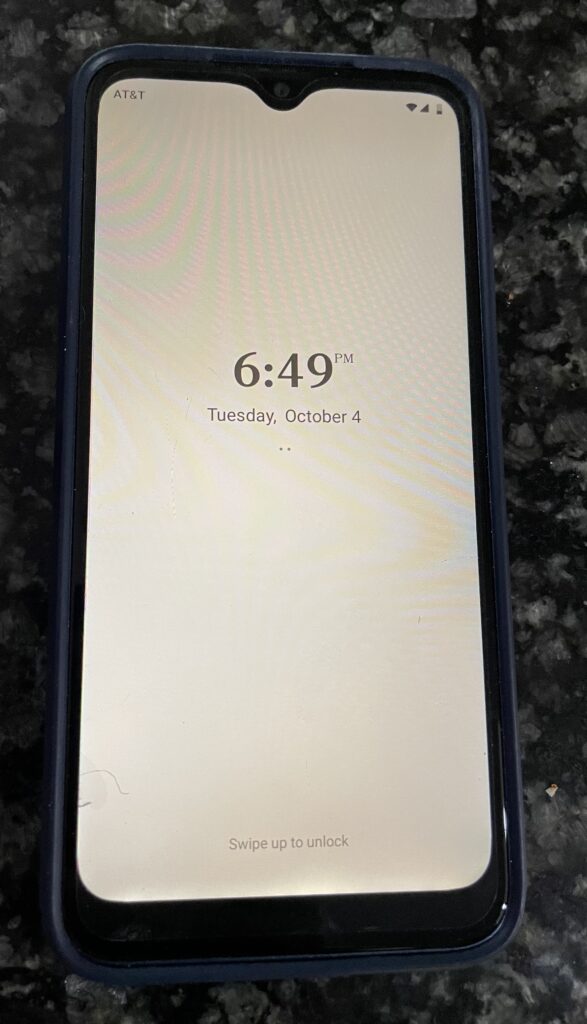


What I Did Not Like
- While texting works pretty well, our son does get left out of some group texts because of limited functionality. Additionally, he is not able to send emojis or giphys which are a pretty standard function of teen (and adult) texting.
- Pictures are very low quality compared to the standard smartphone today. (And there is an annoying buggy feature where if you select a picture to send to someone, once you have clicked that person, there is no way to undo it. The picture must be sent no matter what.)
- Updates to the device are a lot more complicated than they are on a standard smartphone.
- The Family Portal is in Beta mode and is quite disappointing. Here are a few things:
- The location tracking simply does not work. (Installed update yesterday which is supposed to fix this, but it still does not work. Tech support was responsive but ended by saying, “Not all features available within the portal will function as expected at all times.” In my case, the location tracking has never worked.)
- The text messages are accessible but they open to the very first message ever sent from that contact, so you always have to scroll to find the newest messages.
- No pictures sent in text messages are visible in the Family Portal. This update should be a no-brainer.
- The synching of the phone to the Family Portal has been inconsistent.
What I Wished It Had
- The ability to download music and audiobooks. (When we purchased the phone, this feature was supposed to be in development, but so far we haven’t seen any update.)
My conclusion in 2022: The phone serves its primary function in our family which is to eliminate the risk of exposure to harmful material on the internet (through this device) and to minimize the risk of developing unhealthy phone habits, while still providing a means for our son to connect with his friends. On the flip side, the buggy features make it annoying, it is not an enjoyable user experience (two-edged sword here), and it feels overpriced for what you get. But in the end, I think it is a good first phone for a teenager. Eventually an iPhone with intentional parental restrictions will probably be the next step in the training process toward healthy smartphone ownership, but I think this is a good first step.
What’s Changed with the Wisephone II
The Wisephone II fixed several of my biggest complaints about the original. Here’s what’s different as of November 2026:
- Better hardware. The Wisephone II runs on a Samsung Galaxy A-series phone with a 6.7-inch screen, a 5,000 mAh battery, and a 50MP main camera. Photo quality was one of my main frustrations with the original.
- Music is built in. In 2022 I wished for music and audiobooks. The Wisephone II now includes a music tool, along with maps, calendar, notes, a calculator, and the basics.
- Optional “Tool Drawer” apps. Techless now offers a curated list of approved third-party apps, such as WhatsApp, Signal, Waze, Uber, Spotify, and banking apps. There is still no open app store, no web browser, no email, and no social media. Techless decides which apps make the list.
- Better texting with iPhones. Messages now run through Google Messages, and Techless recommends turning on RCS so texting with iPhone users works better. Group texts were a sore spot for us with the original.
- A subscription is required. Every Wisephone II needs an active WiseOS subscription. If it lapses, the phone drops into a restricted mode with only emergency calling and texting, and Techless may reset it after 90 days.
- The Wisephone Portal works differently. Parents can use the Portal to turn features like maps, photos, and the Tool Drawer on or off remotely. Unlike the original Family Portal, it is for controlling what the phone can do, not for monitoring. When our daughter had her Wisephone II, I could not see her text messages.
How Much Does the Wisephone Cost in 2026?
- Phone: $399, plus a one-time $39 activation fee.
- WiseOS subscription with your own carrier: $14.99 per month (a little less if you pay yearly).
- Or use Techless’s own cell service: $24.99 to $69.99 per month depending on data, which includes the WiseOS subscription.
With your own carrier, the first year costs roughly $618 ($399 + $39 + 12 × $15), plus your normal phone bill. It isn’t cheap, which is one reason we treated it as a phone for a season rather than for the long haul. Prices change often, so check Techless’s plans page for the latest.
Wisephone vs. Gabb, Bark, Pinwheel, and Light Phone
Parents often ask me how the Wisephone compares with other phones for kids and teens. I haven’t used these other phones myself, so this overview is based on each company’s published pricing and features (as of November 2026):
| Phone | Upfront cost | Monthly cost | Internet / apps | Designed for |
|---|---|---|---|---|
| Wisephone II | $399 + $39 activation | $14.99 with your carrier, or $24.99+ with Techless | No browser; curated optional apps | Teens and adults who want a modern smartphone without the distractions |
| Gabb Phone 4 / 4 Pro | About $150–$250 | About $30–$40 (Gabb’s network only) | No internet; preloaded kid-safe apps | Younger kids (Phone 4) and teens (4 Pro) |
| Bark Phone | $360 (or $10/mo for 24 months) | From $29 | Parent-controlled apps and filtered web, with content alerts | Parents who want monitoring and controls that loosen as kids grow |
| Pinwheel | Varies by model | $17.99 with your carrier, or $29.99 with Pinwheel Wireless | Parent-approved apps and contacts | Families who want to choose their own carrier |
| Light Phone III | $799 (Light Phone II: $299) | Your own carrier | No browser, no third-party apps | Adults who want the most minimal phone possible |
The biggest difference is philosophy. Gabb and the Light Phone keep things simple by leaving features out. Bark and Pinwheel give parents a dashboard to control and monitor a more capable phone. The Wisephone sits in the middle: it looks and works like a modern smartphone, but Techless decides up front what it can and can’t do. For our family, that made it a good bridge between no phone and an iPhone.
Wisephone FAQs
Is the Wisephone a good first phone for a teenager?
Yes, for a high schooler. The Wisephone II is my preferred first phone for my own kids once they reach high school. Before that, I would rather they not have a phone at all.
Does the Wisephone have internet?
No. The Wisephone has no web browser and no email. It does use data for things like maps, music, and any approved Tool Drawer apps.
Can the Wisephone get social media?
No. Social media apps, games, and an open app store are not available. Techless offers a curated list of optional apps, and it controls that list.
Can parents see text messages on a Wisephone?
Not on the Wisephone II, in our experience. The Wisephone Portal lets parents decide which features and apps the phone can use, but when our daughter had one, I could not see her texts. (The original Wisephone’s Family Portal did show messages, though it was unreliable.) If reading your teen’s messages matters to you, look at a monitoring-focused option like Bark.
Can a Wisephone text iPhones?
Yes. Texts go through Google Messages, and Techless recommends turning on RCS for a better experience with iPhone users. With the original Wisephone, our son sometimes got left out of group texts, so this is worth testing early.
Do you have to pay a monthly fee for the Wisephone?
Yes. The Wisephone II requires a WiseOS subscription (currently $14.99 a month with your own carrier). Without it, the phone is limited to emergency calls and texts.
What phone should come after the Wisephone?
For our kids, the next step was an iPhone at 16, with Covenant Eyes installed and the Freedom app to help them stay inside the lines. Both of those transitions went smoothly, and the habits they built on the Wisephone made a difference.
My Bottom Line in 2026
The Wisephone II is my preferred first phone for my own kids once they reach high school. It protected them from harmful content, overuse, and social media while still letting them stay connected with friends, and it gave them a season to learn how to use technology responsibly before getting a full smartphone. I don’t love the subscription, but as a transitional phone it was worth the cost for us.
We are very grateful this product was available. And we don’t regret keeping our kids off social media and waiting until 16 for a smartphone.
[…] for getting him his first phone. We ended up going with a Wisephone which you can read about here. Reinke does not advocate for getting rid of your smartphone, but he does call us to be intentional […]